
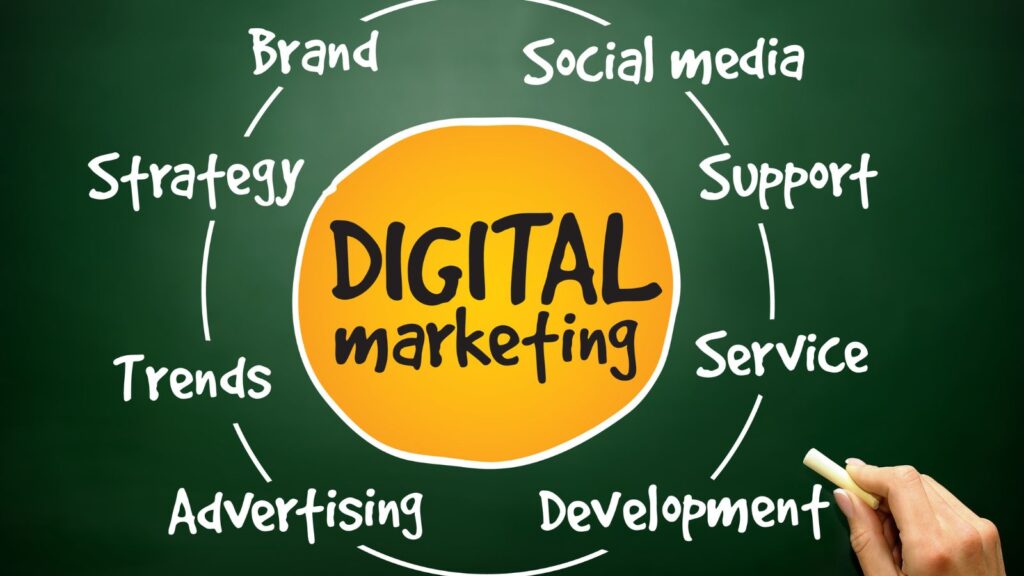
A digital marketing agency is a specialized firm that helps businesses promote their products and services through online channels, using strategies like SEO, PPC, social media, and content marketing to drive measurable growth. In 2026, the landscape has shifted dramatically AI-powered marketing solutions now deliver real-time optimization, predictive analytics, and automated campaign management that traditional agencies simply cannot match. Companies working with AI-driven platforms see 3-5x faster campaign deployment and up to 40% lower costs compared to conventional agency models.
Key Takeaways
- Digital marketing agencies provide comprehensive online marketing services including SEO, PPC, social media management, and web development to help businesses grow their digital presence
- Traditional agencies are being outpaced by AI-powered marketing platforms that offer real-time optimization, 24/7 automation, and data-driven decision-making
- AI SEO and Generative Engine Optimization (GEO) are becoming essential for visibility in ChatGPT, Gemini, and other AI search interfaces
- Modern marketing automation tools reduce campaign management time by 60-70% while improving performance metrics across all channels
- WASK represents the next generation of digital marketing—combining artificial intelligence with multi-channel campaign management for superior ROI
What Is a Digital Marketing Agency?
A digital marketing agency serves as an external partner that manages a company’s entire online marketing ecosystem. These agencies employ specialists in various disciplines to create, execute, and optimize digital marketing campaigns across multiple platforms. Traditional agencies typically assign account managers, strategists, copywriters, designers, and analysts to client accounts.
The core function of any full-service digital marketing agency is to increase brand visibility, drive qualified traffic, generate leads, and ultimately boost revenue through strategic online initiatives. They accomplish this by leveraging digital marketing channels such as search engines, social media platforms, email systems, and websites to reach target audiences where they spend their time online.
Modern agencies must navigate an increasingly complex digital ecosystem where consumer behavior, platform algorithms, and competitive landscapes shift rapidly. This reality has created a fundamental challenge for traditional agency models built on monthly retainers and manual campaign management.
What Are the Different Types of Digital Marketing Services?
Digital marketing services encompass a wide range of specialized tactics designed to achieve specific business objectives. Understanding these services helps businesses select the right partner for their growth goals.
Search Engine Optimization (SEO)
Search engine optimization remains the cornerstone of sustainable digital visibility. This practice involves optimizing website structure, content, and authority signals to rank higher in organic search results on Google, Bing, and other search engines.
Effective SEO strategies include comprehensive keyword research, technical website optimization, high-quality content creation, and strategic link building. The goal is to capture users actively searching for products, services, or information related to your business—traffic that typically converts at higher rates than other channels.
Traditional SEO services require months of consistent effort before showing results, with agencies typically charging $2,500-$10,000 monthly for comprehensive programs. The manual nature of competitor analysis, content optimization, and link prospecting makes this one of the most time-intensive services.
AI SEO & Generative Engine Optimization (GEO)
Generative Engine Optimization represents the evolution of SEO for the AI era. As millions of users now get answers from ChatGPT, Claude, Gemini, and Perplexity instead of traditional search engines, businesses must optimize for how AI systems retrieve and present information.
GEO strategies focus on creating authoritative, well-structured content that AI models cite as sources. This includes implementing schema markup, creating comprehensive topic clusters, and establishing clear E-E-A-T signals (Experience, Expertise, Authoritativeness, Trustworthiness) that AI systems recognize.
The shift toward AI-powered search has made traditional SEO alone insufficient. Companies need visibility in both conventional search engines and emerging generative AI platforms to maintain comprehensive digital presence.
Pay-Per-Click (PPC) Marketing
PPC advertising delivers immediate visibility by placing ads in front of target audiences across search engines, social platforms, and display networks. Businesses pay only when users click their ads, making it a performance-based digital advertising model.
Google Ads, Facebook Ads, LinkedIn advertising, and programmatic display campaigns all fall under the PPC umbrella. Successful campaigns require continuous bid management, ad copy testing, audience refinement, and conversion tracking—tasks that consume significant agency resources.
Traditional agencies charge 10-20% of ad spend as management fees, meaning a $10,000 monthly budget incurs $1,000-$2,000 in agency costs alone. This model becomes increasingly expensive as businesses scale their advertising investments.
Social Media Marketing (SMM)
Social media marketing builds brand awareness and community engagement across platforms like Facebook, Instagram, LinkedIn, Twitter, and TikTok. Services include content creation, community management, influencer partnerships, and social media advertising.
Effective SMM strategies require understanding each platform’s unique algorithm, audience demographics, and content formats. Agencies typically create content calendars, design graphics, write copy, respond to comments, and analyze engagement metrics.
The time-intensive nature of quality social media management—often requiring 20-40 hours weekly for active accounts—makes this one of the more expensive agency services, typically ranging from $1,500-$8,000 monthly.
Email Marketing
Email marketing remains one of the highest-ROI digital channels, delivering an average return of $36-$42 for every dollar spent. Services include list building, segmentation, campaign design, automation workflows, and performance analytics.
Sophisticated email marketing campaigns nurture leads through personalized sequences, recover abandoned carts, re-engage inactive customers, and maintain ongoing relationships with existing clients. The key to success lies in segmentation and automation—areas where AI excels.
Web Design & Development
Website design and development creates the foundation for all digital marketing efforts. Modern sites must be mobile-responsive, fast-loading, conversion-optimized, and built with SEO best practices in mind.
Beyond aesthetics, effective web development incorporates user experience (UX) research, conversion rate optimization (CRO), security protocols, and analytics integration. Agencies typically charge $5,000-$50,000+ for custom website projects, with ongoing maintenance fees.
Why Traditional Digital Marketing Agencies Are Becoming Obsolete
The conventional digital marketing agency model faces fundamental limitations that AI-powered solutions have eliminated. Traditional agencies operate during business hours, require weeks to implement changes, and rely heavily on manual processes that introduce human error and inconsistency.
Agency overhead costs—office space, large staff, client entertainment, and profit margins—get passed directly to clients. This creates a situation where businesses pay premium prices for services that could be delivered more efficiently through technology.
The monthly retainer model typical of agencies creates misaligned incentives. Agencies profit from maintaining the status quo rather than achieving breakthrough results quickly. A campaign that succeeds in three months generates less revenue than one dragging on for twelve months.
Response time limitations pose another critical weakness. When a PPC campaign underperforms or a competitor launches an aggressive play, traditional agencies need days or weeks to analyze data, schedule meetings, get approvals, and implement changes. In fast-moving digital markets, this delay costs thousands in wasted ad spend and lost opportunities.
Perhaps most significantly, traditional agencies cannot match the data processing capabilities of AI systems. A human analyst might review hundreds of data points daily; AI systems analyze millions of signals in real-time, identifying optimization opportunities invisible to manual analysis.
Meet WASK: Your AI-Powered Digital Marketing Partner
WASK represents the paradigm shift from traditional agency models to AI-driven marketing automation. This platform combines artificial intelligence with comprehensive campaign management tools to deliver superior results at a fraction of traditional agency costs.
Unlike agencies that assign your account to junior staff supervised occasionally by senior strategists, WASK provides enterprise-grade AI technology that works 24/7 on your campaigns. The system continuously monitors performance, tests variations, adjusts bids, and optimizes targeting without human intervention required.
The platform centralizes multi-channel marketing management in one interface, eliminating the fragmentation that occurs when different agency teams handle SEO, PPC, social media, and email separately. This unified approach ensures consistent messaging and coordinated strategy across all digital marketing channels.
How WASK Outperforms Traditional Agencies
AI-powered optimization delivers results that human marketers simply cannot match manually. WASK’s algorithms process campaign data continuously, making micro-adjustments that compound into significant performance improvements over time.
The cost structure fundamentally differs from traditional agencies. Instead of paying $3,000-$15,000 monthly retainers plus percentages of ad spend, businesses access sophisticated marketing automation tools at predictable software subscription prices. This typically reduces marketing costs by 50-70% while improving results.
Campaign deployment speed accelerates dramatically. Tasks that take agencies 2-3 weeks—competitive research, audience building, ad creation, landing page optimization—can be executed in hours through AI-assisted workflows.
The platform’s machine learning algorithms identify patterns and opportunities across thousands of campaigns, applying insights that no single agency could derive from their limited client base. This collective intelligence improves every user’s results.
Real-Time Optimization Across All Channels
WASK’s most powerful advantage lies in real-time campaign optimization. The system monitors your ads, keywords, audiences, and budgets continuously, making adjustments the moment performance indicators shift.
When a PPC campaign keyword begins underperforming, WASK automatically reduces bids or pauses the keyword before significant budget waste occurs. When an ad variation shows superior performance, the system reallocates budget immediately to capitalize on success.
Cross-channel insights inform strategy in ways siloed agency teams cannot match. The platform recognizes when social media engagement spikes for specific topics and automatically adjusts content calendars and ad targeting to align with demonstrated audience interest.
Budget allocation becomes dynamic rather than static. Instead of locking in monthly budgets per channel—as traditional agencies do—WASK shifts resources fluidly toward the highest-performing channels and campaigns. This ensures every marketing dollar works as efficiently as possible.
The analytics and reporting capabilities provide transparency that agency black boxes cannot offer. Real-time dashboards show exactly how every campaign performs, where budget goes, and what results are generated—no waiting for monthly reports or scheduled calls.
For businesses serious about digital marketing performance, the choice becomes clear: continue paying premium prices for slow, manual agency services, or leverage AI-powered platforms that deliver superior results through automation, intelligence, and real-time optimization.
The future of digital marketing belongs to companies that embrace artificial intelligence in marketing—tools that augment human strategy with machine precision and speed. WASK represents this future available today.